Disordered Eating in High School Athletes
If you are reading this, you might be concerned about disordered eating (DE) for yourself, a teammate, or a friend. First, know this: you are not alone. Many athletes face these challenges, and taking a step toward recovery is a powerful act of courage.
Understanding Disordered Eating
Disordered eating is more common among athletes than you might think. The pressure to perform, improve, and meet external expectations can create an unhealthy focus on food, exercise, and body image.
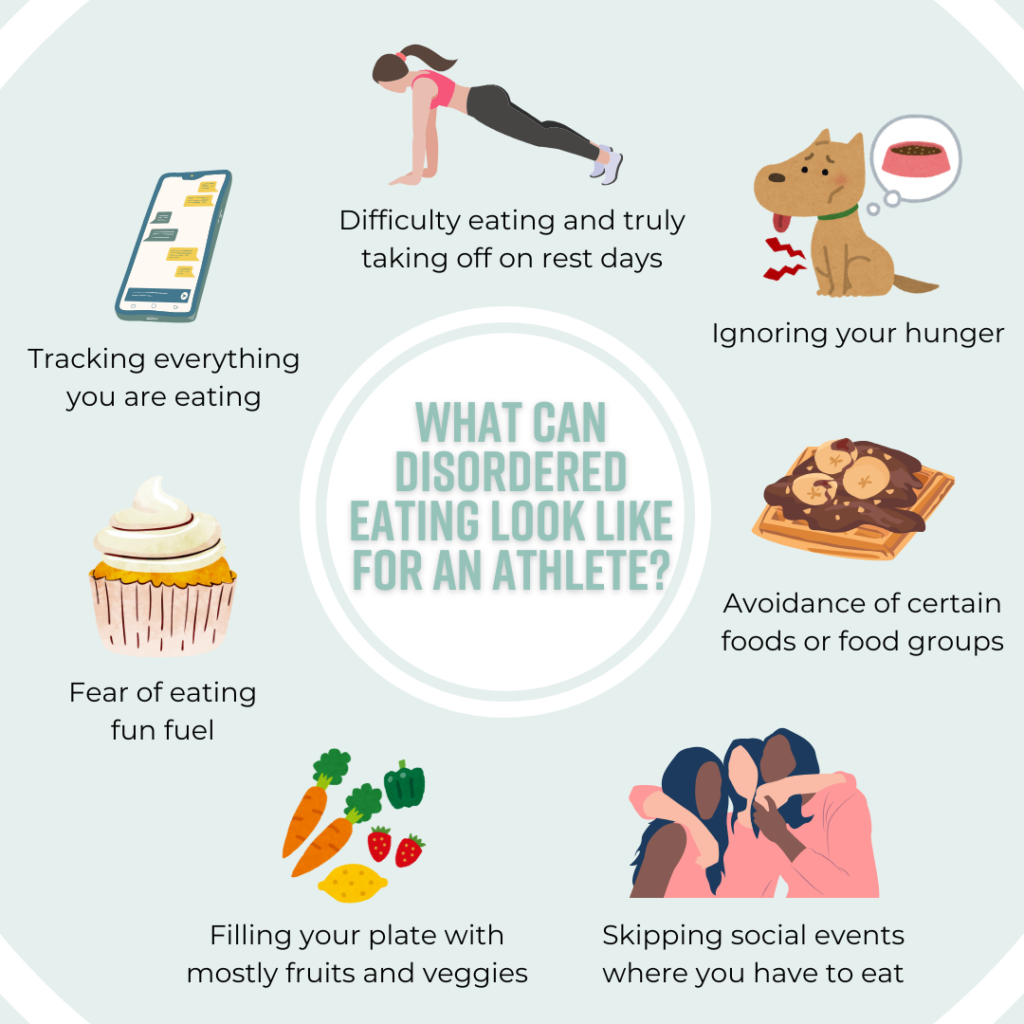
Disordered eating can look differently in every athlete. It may look like:
- Tracking and measuring everything you eat
- Having a fear of eating certain foods or food groups
- Filling your plate with mostly fruits and vegetables
- Having difficulty eating and truly taking off on rest days
- Ignoring your hunger cues
- Skipping social events where you have to eat
You are a competitive athlete, it is instinct to want to do what you can to perform well. Please remember this: your body is your greatest tool. It needs the right fuel to train, compete, and thrive. Ignoring the signs of disordered eating can lead to serious health issues, including:
- Poor energy levels during games or practice
- Weight and muscle loss
- Increased risk of injuries
- Changes in your gastrointestinal tract - bloating and constipation
- Disruptions in focus and concentration
- Changes in heart rate and blood pressure
Building Your Support System
Recovery isn’t a solo journey—you need a team behind you. Here are some steps to start building your support system:
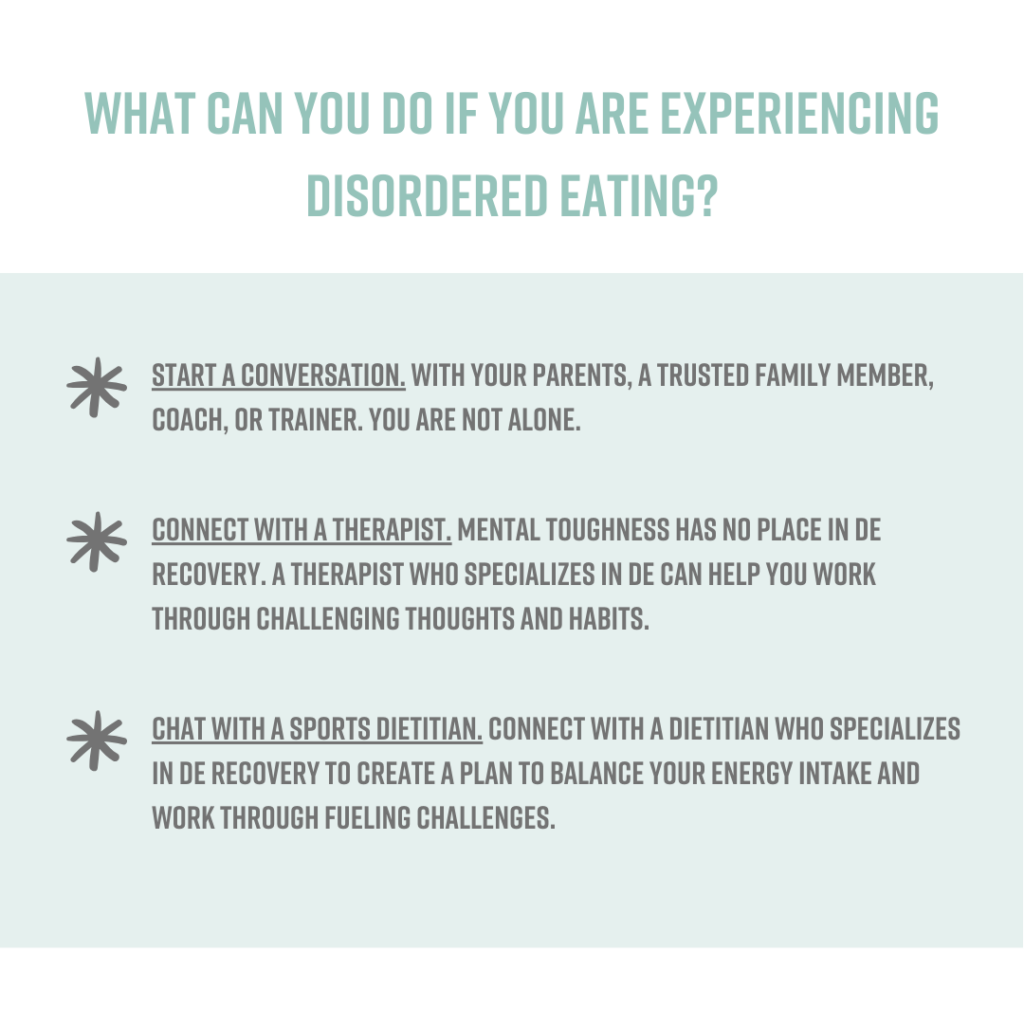
- Reach Out to Trusted Adults: Talk to a coach, parent, teacher, or school counselor who can help you take the next steps.
- Work with Professionals: A Registered Sports Dietitian with experience supporting clients with disordered eating can guide you in redefining your relationship with food and ensure you are meeting your nutritional needs for peak performance. A therapist can help address underlying emotional challenges around fueling.
- Lean on Your Teammates: If a friend or teammate is struggling, offer a listening ear and encourage them to seek support. Recovery starts with open conversations.
Recognizing the signs of disordered eating is the first step toward recovery. Whether you’re personally affected or supporting someone else, know you are not alone. With the right tools and guidance, you can rebuild a balanced relationship with food and training.
Final thoughts: You’re Stronger Than You Know
Your worth isn’t tied to your performance, appearance, or food choices. Prioritize your well being, because when you take care of yourself, everything else—training, competing, and succeeding—will fall into place.
If you or someone you know is struggling, please don’t hesitate to reach out.