
The Power of Energy Dense Meals for Athletes
As a high school athlete, your body requires a lot of energy to perform, recover, and excel in your sport. You also need additional energy to support your growth and development. Yet, many high school athletes struggle to meet their energy needs, leading to fatigue, poor performance, and even increased risk of injury. The solution? Let’s make your meals energy dense.
Let’s start with “What is energy density?”. Energy density refers to the amount of energy (calories) a food provides relative to its weight or volume. Put simply, how can you maximize your energy intake into a small and simple bite. By incorporating energy dense foods you can fuel your body without the discomfort of feeling too full all day long.
Why Energy Density Matters for High School Athletes
- Supports Performance: High school athletes burn a lot of calories, especially during intense training periods. If you’re not meeting your energy needs, you may feel sluggish, have trouble concentrating, or experience decreased endurance.
- Promotes Recovery: Recovery is just as important as training. Energy dense meals help replenish glycogen stores and provide the building blocks needed for muscle repair and growth.
- Prevents Relative Energy Deficiency in Sport (REDs): Under fueling can lead to REDs, a condition that negatively impacts bone health, immune function, and hormonal balance. Increasing the energy density of your meals is a proactive way to avoid this. I share more about REDs on my podcast!
Ready to learn more about balancing your energy needs? Join the Academy— your comprehensive online sports nutrition library—for resources tailored to high school athletes and their families.

How High School Athletes Can Make Their Meals Energy Dense
Here are simple and effective ways to make your meals more energy-dense:
1. Include Essential Fats
- Why: Fats provide more than double the calories per gram compared to protein or carbohydrates. They are also a great source of long lasting energy for long practices and two a days.
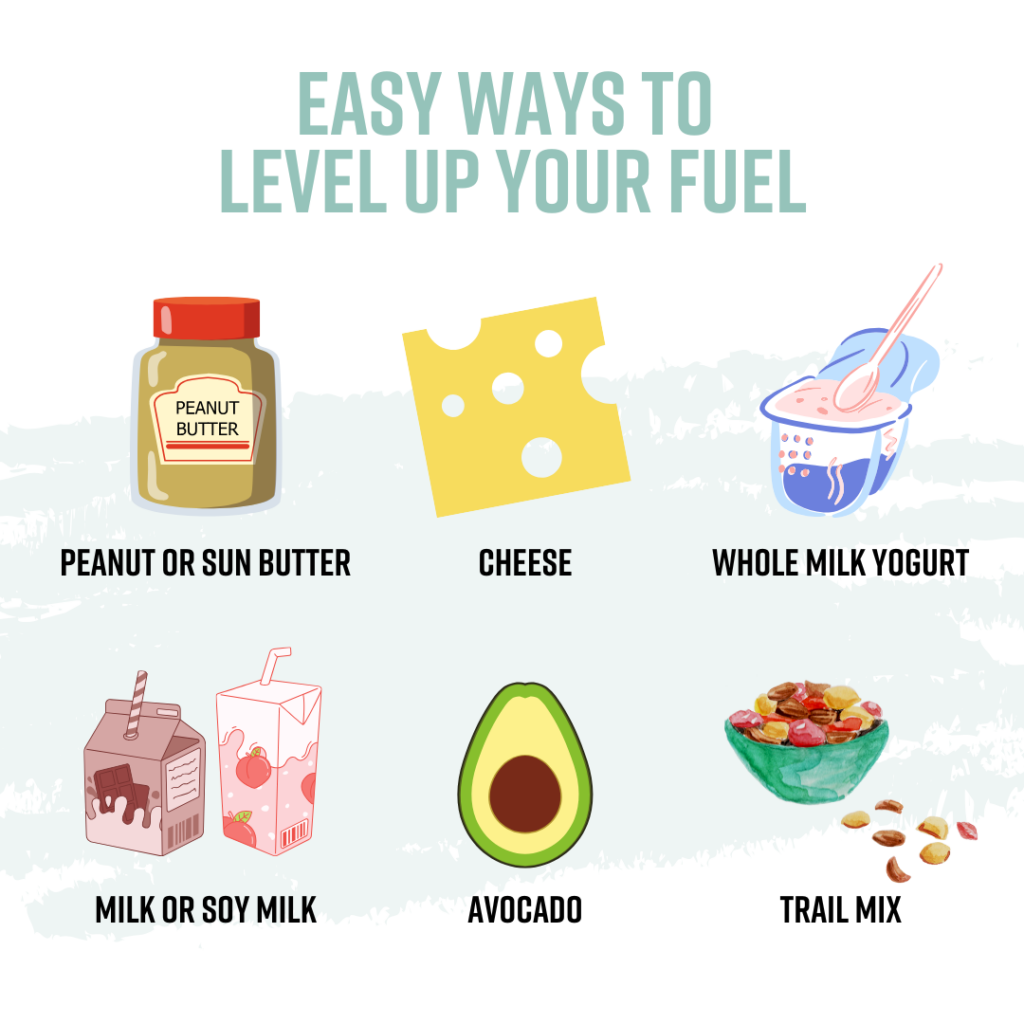
- How: Add avocado to sandwiches, drizzle olive oil over roasted vegetables, or add peanut butter to your yogurt.
2. Focus on Carbohydrates
- Why: Carbs are your body’s primary source of fuel.
- How: Don’t shy away from bread, pasta, or cereals. Carbohydrates should be half of your plate!
3. Boost with Protein
- Why: Protein supports muscle repair and recovery.
- How: Top your meals with shredded cheese, add an extra egg to breakfast, or include lean meats like beef, chicken, or fish.
4. Add Calorie Rich Extras
- Why: Small additions can significantly boost energy without overwhelming your plate.
- How: Use nut butters, honey, or granola as toppings for oatmeal, smoothies, or toast.
For more tips like these, including sample meal plans and snack ideas, join the Academy today to gain exclusive access to expert advice and resources for high school athletes.
Common Misconceptions About Energy Dense Foods
Some high school athletes hesitate to add calorie rich foods due to fear of “overeating” or “gaining weight.” However, being energy dense doesn’t mean being unhealthy. It’s about strategic choices that align with your athletic goals! At the end of the day, we know you need a lot of fuel!
For example, choosing a smoothie made with Greek yogurt, peanut butter, and fruit provides far more nutrients and energy than a low calorie protein shake. Learning to fuel correctly is key to performing your best.
Want to make fueling simple and effective? Sign up for the Academy to access tools, recipes, and support from a registered sports dietitian (me!) tailored to high school athletes.
Take Action Today
Fueling your body effectively is an investment in your performance, health, and long-term athletic success. Increasing the energy density of your meals can be a game changer, helping you feel stronger, train harder, and recover faster.
If you’re unsure where to start or want personalized guidance, join the Academy today. With exclusive resources and step-by-step strategies, you’ll have everything you need to fuel your journey as a high school athlete—and beyond.